
Post written by Shabana Haider, CAGH Board Member
The Canadian Association for Global Health (CAGH) draws attention to the ongoing persistence of wild poliovirus type 1 (WPV1) in Pakistan and Afghanistan, the only two countries in the world where polio has never been eradicated. Afghanistan and Pakistan’s continued endemic transmission represents not only a failure of global health equity, but a direct and ongoing threat to international health security, including for Canada. As the global community approaches the 2027 target for WPV1 eradication, the path forward demands urgent, coordinated, and equity-driven action.
Poliovirus is highly contagious and spreads primarily through the fecal-oral route, thriving in settings of inadequate sanitation and overcrowding. In the vast majority of infections, the virus causes no symptoms or only mild illness. However, in approximately one in 200 infections, poliovirus invades the nervous system and causes irreversible paralysis, typically of the legs. There is no cure and paralysis is permanent.
Children under five bear the overwhelming burden of paralytic polio: the World Health Organization (WHO) estimates that 65-75% of cases in developing countries occur in children under three, and 95% in those under five. A child paralyzed by polio today faces a lifetime of disability, and barriers to education, economic participation, and social exclusion in contexts where disability support systems are weak.
Post-polio syndrome, a condition causing progressive muscle weakness decades after the initial infection, affects an estimated 25- 40% of polio survivors, adding a further dimension of long-term burden. The health system costs of managing polio’s sequelae, rehabilitation, orthotics, surgical correction, lifelong care - compound over generations.
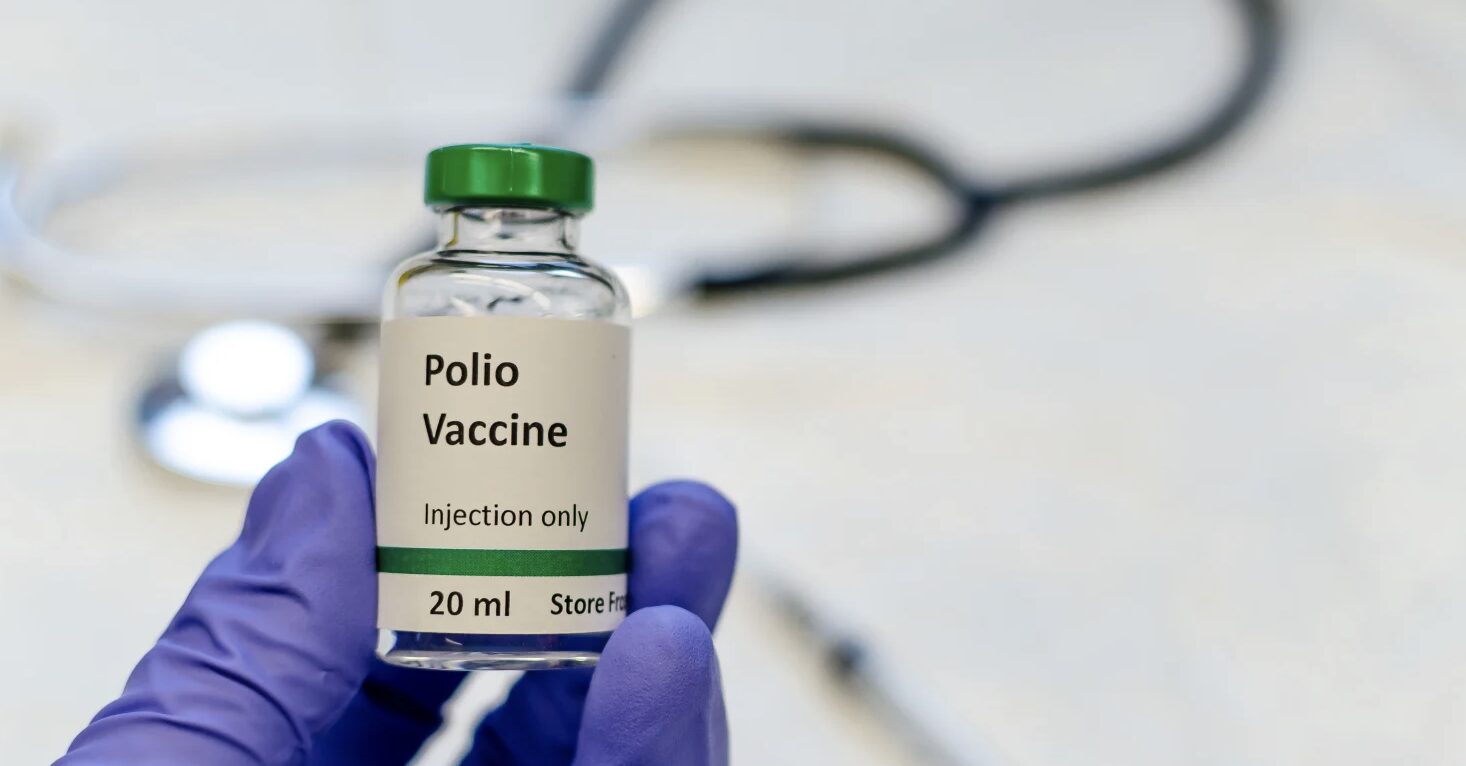
Polio is entirely vaccine-preventable. The oral polio vaccine (OPV) and inactivated polio vaccine (IPV) are safe, effective, and inexpensive. The challenge is not the absence of tools- it is the failure to reach every child, every time.
Both countries’ inability to interrupt WPV1 transmission despite decades of effort reflects a convergence of structural, political, and social determinants that cannot be resolved through campaigns alone.
Global Context: The Last Frontier, With Global Consequences
Poliovirus does not respect borders. As long as WPV1 circulates in Pakistan and Afghanistan, no country can consider itself fully insulated from the risk of importation. This is not theoretical: WPV1-positive environmental samples have been detected in the United Kingdom, Germany, and the United States in recent years, linked to travel or migration from endemic countries. The WHO has maintained the global poliovirus situation as a Public Health Emergency of International Concern (PHEIC) since 2014. Now more than a decade later, it’s- the longest-standing PHEIC in WHO’s history.
Why This Matters to Canada
Canada maintains strong people-to-people ties with Pakistan and Afghanistan: the Pakistani and Afghani-Canadian diaspora numbers in the hundreds of thousands and includes some of the highest volumes of transnational travel and family visitation among immigrant communities. This connection, a source of immense cultural richness, also creates pathways for viral importation in both directions when vaccination coverage is incomplete.
The U.S. Center for Disease Control (CDC) has issued an active Level 2 Global Polio Travel Health Advisory that includes these countries, and Canada’s Public Health Agency (PHAC) advises travelers to ensure polio vaccination before visiting the country. Canada’s own experience with measles where imported cases drove the loss of elimination status in 2025, demonstrates that vaccine-preventable diseases eliminated domestically can and do return when global eradication is incomplete. While Polio is not as contagious as measles, it presents an important public health risk, with a higher risk of permanent disability rather than recoverable illness.
Canada is also a significant contributor to the Global Polio Eradication Initiative (GPEI). At a moment when U.S. funding withdrawal has created a critical financing gap, sustained and potentially increased Canadian investment is not only appropriate, it is strategically necessary to protect the global eradication timeline and, by extension, Canada’s own health security.
Call to Action
CAGH calls on the Government of Canada and the broader Canadian global health community to:
- Advocate multilaterally for polio eradication to remain a global priority, including through Canada’s engagement at WHO, the G7, and within the GPEI governance structures, ensuring that the eradication target is treated as a binding commitment rather than an aspirational benchmark. Sustain and expand financial contributions to GPEI.
- Support investments in health system strengthening in the two countries that address the structural drivers of under-immunization including maternal and child health integration, WASH infrastructure, community health worker capacity, and equitable routine immunization delivery, recognizing that campaign-only approaches cannot substitute for resilient primary health care.
- Support research and innovation partnerships with public health institutions in the two countries to support surveillance, genomic sequencing, vaccine delivery research, and community engagement strategies, building the scientific capacity essential for sustainable eradication.
Conclusion: The Final Mile Demands Global Solidarity
Humanity has eradicated smallpox and reduced poliovirus to its last two endemic countries. The finish line is within sight. But the final mile of eradication has always been the hardest, requiring the greatest effort to reach the most isolated, most marginalized, most insecure communities.
Children who remain unvaccinated against polio are not statistics. They are children at risk of permanent paralysis from a disease the world has the tools to prevent. Canada has the resources, the relationships, and the global health leadership legacy to make a meaningful difference. CAGH calls on Canada to show its commitment to global polio eradication, not only as a matter of foreign policy, but as an expression of the values of equity, solidarity, and shared responsibility that define Canada’s best contributions to the world.
References
Centers for Disease Control and Prevention. Global Polio Eradication Initiative — history and progress. Atlanta: CDC; 2025 [cited 2026 Apr 2]. Available from: https://www.cdc.gov/global-health/countries/pakistan.html
Wikipedia contributors. Polio in Pakistan [Internet]. Wikipedia, The Free Encyclopedia; 2026 [cited 2026 Apr 2]. Available from: https://en.wikipedia.org/wiki/Polio_in_Pakistan
World Health Organization. Statement of the forty-fourth meeting of the Polio IHR Emergency Committee [Internet]. Geneva: WHO; 2026 [cited 2026 Apr 2]. Available from: https://www.who.int/news/item/04-03-2026-statement-of-the-forty-fourth-meeting-of-the-polio-ihr-emergency-committee
Pakistan National Reference Laboratory. WPV1 detections in environmental surveillance, 2025. Islamabad: National Institute of Health; 2025.
World Health Organization. Poliomyelitis — key facts [Internet]. Geneva: WHO; 2024 [cited 2026 Apr 2]. Available from: https://www.who.int/news-room/fact-sheets/detail/poliomyelitis
World Health Organization. WHO and UNICEF estimates of national immunization coverage. Geneva: WHO; 2024 [cited 2026 Apr 2]. Available from: https://immunizationdata.who.int/
World Health Organization. Statement of the forty-first meeting of the Polio IHR Emergency Committee [Internet]. Geneva: WHO; 2025 [cited 2026 Apr 2]. Available from: https://www.who.int/news/item/10-04-2025-statement-of-the-forty-first-meeting-of-the-polio-ihr-emergency-committee
World Health Organization. Polio Public Health Emergency of International Concern [Internet]. Geneva: WHO; 2025 [cited 2026 Apr 2]. Available from: https://www.who.int/teams/health-security-preparedness/ihr-secretariat/covid-19-and-pheic
GlobalSecurity.org. WHO warns polio progress in Afghanistan, Pakistan at risk due to US funding cut [Internet]; 2025 [cited 2026 Apr 2]. Available from: https://www.globalsecurity.org/military/library/news/2025/01/mil-250129-voa05.htm
Centers for Disease Control and Prevention. Global Polio- Level 2 travel health notice [Internet]. Atlanta: CDC; 2025 [cited 2026 Apr 2]. Available from: https://wwwnc.cdc.gov/travel/notices/level2/global-polio